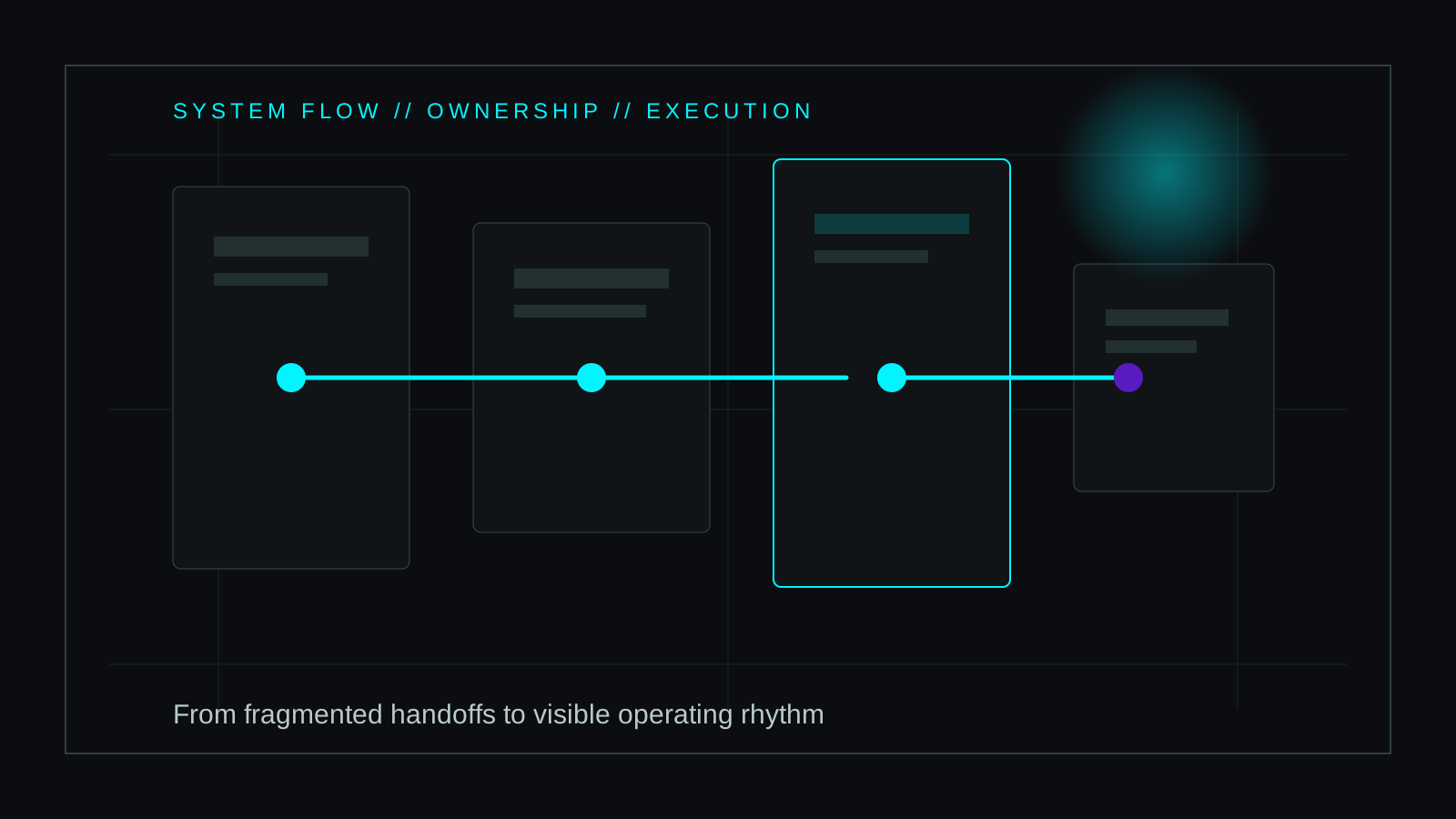
When teams say they need better operations, they often mean they need less ambiguity. They are feeling the consequences of unclear ownership, invisible bottlenecks, inconsistent follow-through, and meetings that generate more motion than traction. The first solution people reach for is often a tool, but the real issue is usually structural.
Why fast-moving teams lose clarity so quickly
Fast-moving teams tend to accumulate hidden operational debt. A decision gets made in a call, but not documented. A project gets assigned, but the owner is unclear. A priority changes, but the downstream people never hear the update. None of this looks dramatic in isolation, yet together it creates drag.
This is why an operating system matters. I do not mean software. I mean a working layer of routines, expectations, checkpoints, and decision paths that makes execution visible. A good operating system creates momentum without forcing people into heavy process.
The first thing I map is not the org chart
When I enter a messy operational environment, I usually start with handoffs. Who is giving work to whom? Where does information get lost? Which decisions are made informally? What requires approval but has no clear gate? This usually tells me more than an org chart ever could.
Handoffs reveal where confusion actually lives. They show whether the team has role clarity, whether upstream assumptions are realistic, and whether the work can move without someone constantly rescuing it. A team can look organized on paper and still operate reactively because its handoffs are broken.
Build the minimum operating rhythm first
Before dashboards, before automation, before extensive reporting, I establish the minimum rhythm the team needs to stay aligned. This often includes a weekly operating review, a short checkpoint for blockers, a simple status format, and a visible way to track work in flight.
The key is restraint. If the rhythm becomes too ceremonial, people stop trusting it. If it is too light, it fails to support decisions. The goal is a cadence that makes it easier to see reality, not a performance of organization.
Define ownership in a way that survives pressure
Ownership needs to be clear at three levels: who decides, who executes, and who needs visibility. When pressure rises, teams often blur these roles. Then multiple people start acting on the same issue, or nobody moves because everyone assumes someone else is handling it.
I prefer ownership models that are explicit and practical. Every major workflow should answer a few operational questions quickly: who opens the work, who advances it, who approves it, and where it is recorded. If those answers are hard to find, the system is too vague.
Documentation should support execution, not slow it down
A lot of teams avoid documentation because they associate it with bureaucracy. That usually happens when documentation is disconnected from live work. If people have to reconstruct what happened after the fact, the process feels punitive and fragile.
Useful documentation is embedded into execution. It captures status, decisions, approvals, and exceptions as the work moves. It should reduce memory dependence, improve accountability, and make future handoffs cleaner. In good systems, documentation is not a separate task. It is part of the workflow itself.
Metrics should trigger action, not decorate slides
Not every team needs more metrics. Most teams need fewer metrics with clearer purpose. A metric becomes useful when it helps a team decide what to change, where to intervene, or when to escalate.
For early operational systems, I usually focus on a very small set of indicators: throughput, delay points, error patterns, and recurring blockers. The point is not to produce an impressive dashboard. The point is to create a feedback loop that helps the team act faster and with more confidence.
Automation comes after structure
Automation is powerful, but it should come after the core operating model is stable. If a team automates a confused process, it usually just accelerates noise. That is why I treat automation as a later layer: first define the rhythm, then standardize the workflow, then automate repetitive or error-prone points.
This sequence matters. Structure gives automation something reliable to amplify. Without that base, tools create an illusion of maturity while the underlying system remains inconsistent.
What a healthy operating system feels like
When the system is working, teams stop depending on heroic effort. Priorities are easier to understand. Decisions travel more cleanly. Follow-up becomes less personal and more procedural. Meetings become shorter because the operating layer already carries context.
That is usually the real sign of progress. Not more process for its own sake, but less friction in the day-to-day reality of execution.
Final thought
Good operations design is not about making a team look sophisticated. It is about making execution easier, clearer, and more resilient. The strongest systems are often lightweight, visible, and boring in the best way. They help people do the work without having to repeatedly decode how the work gets done.